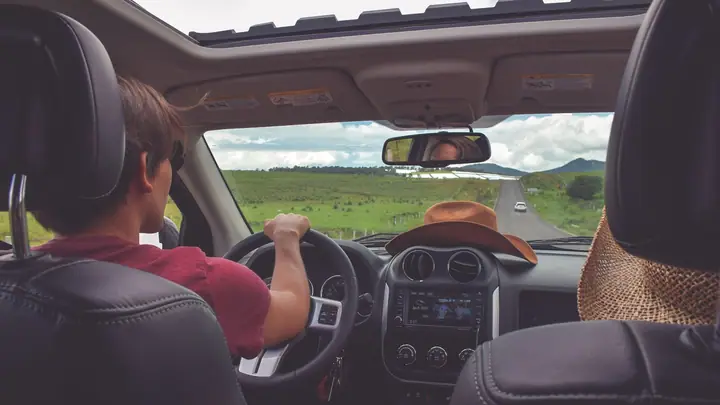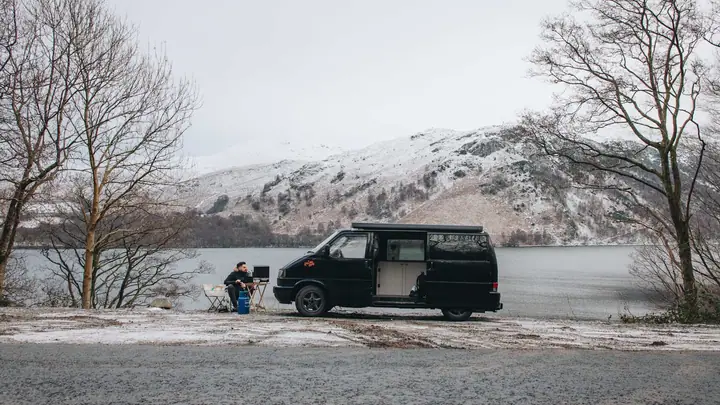
Self-Drive Europe: How It Works for First-Time Visitors
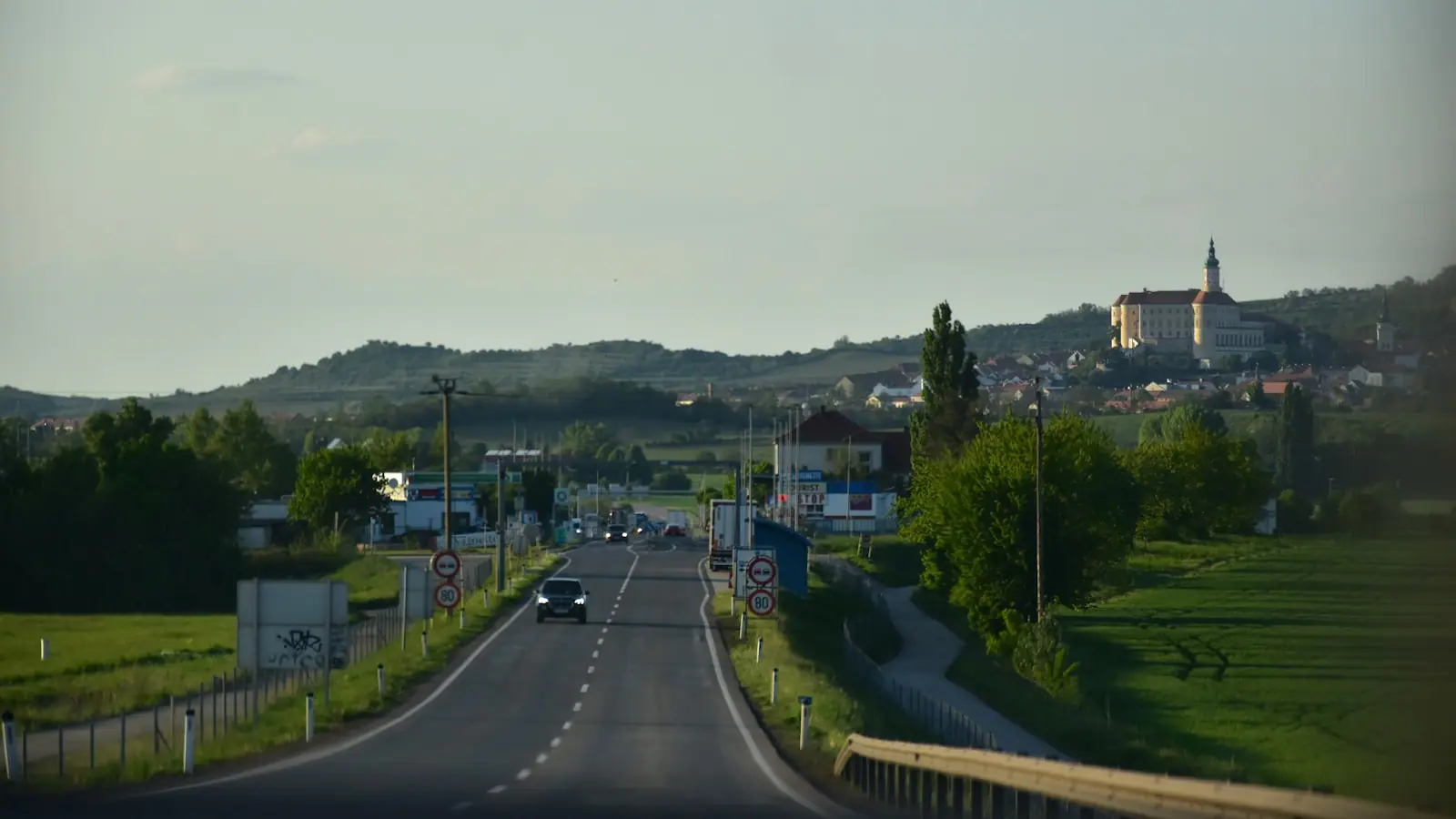
A self-drive Europe trip means you fly into a European city, pick up a rental car, and drive a planned route between hotels at your own pace. No coach, no fixed group, no guide with a flag. If you hold an Indian or GCC licence, you can do this legally with one extra document, and the trip typically costs far less per person than an organised group tour from Dubai or Mumbai.
That is the model in one paragraph. What follows is the honest version for first-timers: what self-drive actually is compared with a coach tour or trains, whether your licence works at the rental desk, how to get an automatic car, what the money really looks like, the road rules that generate fines by post, and how vegetarian and halal families eat well between cities.
Key Takeaways
- Your home licence plus an International Driving Permit is the working combination; the IDP costs roughly $20-53 and must be issued in your home country before you fly (SchengenTraveler).
- Economy rental cars run roughly $25-100+ per day depending on country, with 2026 city baselines around EUR 22/day in Madrid, EUR 27 in Rome and EUR 31 in Paris (Trip Budget Calculator).
- Rental desks block a EUR 500-2,000 deposit on a physical credit card in the main driver's name; debit and prepaid cards are generally refused (Europcar).
- EU petrol averaged EUR 1.754/L in mid-July 2026, from about EUR 1.54/L in Spain to EUR 2.10/L in Germany (fuel-prices.eu; GlobalPetrolPrices).
- Self-planned trips come out at roughly half the price of an equivalent organised tour, at the cost of your own research time (Rick Steves forum comparison).
What Is a Self-Drive Trip, Exactly?
A self-drive trip is a holiday where the route, hotels and car are arranged in advance, and you do the driving. You are not navigating blind: each day has a planned drive of a few hours between pre-booked hotels, with the sights along the way yours to take or skip. It sits between a fully guided coach tour and pure backpacking.
The comparison against the two alternatives most GCC and Indian travellers know is worth spelling out.
Versus a group coach tour. A coach tour trades freedom for zero effort: fixed departure dates, 40 strangers, 20 minutes at each viewpoint, buffet dinners chosen for the average of the bus. Self-drive keeps the structure, a confirmed hotel every night, but you leave when you want, stop at the lake nobody scheduled, and eat where you choose. The forum consensus on cost is blunt: booking the same trip yourself comes to roughly half the price of the organised version (Rick Steves community).
Versus trains. Rail works brilliantly city-to-city. It does not take you to an Alpine pass at sunrise, a Tuscan agriturismo, or a fjord viewpoint with three children and six suitcases. The moment your trip is about landscapes rather than capitals, the car wins.
You will also see the terms "self-drive tour", "self-drive holiday" and "fly-drive" used by UK and European operators. They all describe the same model: fly in, drive a pre-planned route, fly home. If the planning itself is what you want to skip, that packaged version of self-drive exists too, and it is exactly what a service like ours builds; more on that at the end.
Will Your Indian or GCC Licence Work in Europe?
Yes, provided you carry an International Driving Permit alongside your original licence. India issues IDPs under the 1949 Geneva Convention through state RTOs, and this format is widely accepted for tourist driving across Europe (Rick Steves). The IDP is a translation of your licence, not a replacement, so both documents travel together.
Where it is enforced varies. Italy and Austria technically require non-EU visitors to carry an IDP, with fines from roughly EUR 100 upwards for driving without one where required (Rick Steves; SchengenTraveler). Spain strictly enforces it for most non-EU licence holders, including Indian and GCC licences (WTG Spain). France accepts a foreign licence only with a translation, which the IDP satisfies (Rick Steves).
For GCC residents the script question matters more than the country question. Sixt states plainly that a licence printed in a non-Latin script, which covers most Arabic-script UAE and Saudi licences, must be presented with a valid IDP or official translation (Sixt Help Center). Hertz requires drivers outside its recognised-licence list to present an IDP with a licence held for at least 12 months (Hertz rental terms). Whether a newer bilingual UAE card passes without one depends on the branch agent you get that day, so carry the IDP regardless.
The practical rule: get the IDP at home, before departure, for roughly $20-53; no European office will issue one to a visitor (SchengenTraveler). The full application process for India, the UAE and beyond is in our International Driving Permit guide.
At a glance, from the sources above:
| Where | IDP with an Indian or GCC licence | Detail |
|---|---|---|
| Italy, Austria | Required | Fines from ~EUR 100 for driving without one (Rick Steves) |
| Spain | Required, strictly enforced | Applies to most non-EU licences (WTG Spain) |
| France | IDP satisfies the translation rule | Foreign licence alone is not enough (Rick Steves) |
| Any rental desk | Required for non-Latin-script licences | Covers most Arabic-script UAE and Saudi cards (Sixt) |
| Getting one | At home only, before departure | Roughly $20-53; not issued in Europe (SchengenTraveler) |
One reassurance on the driving itself. All of continental Europe drives on the right, the same side as the UAE and the rest of the Gulf. Indian drivers switch sides, but into a left-hand-drive car, which most people find recalibrates the brain within a day. GCC drivers change nothing except the speed limits.
Renting the Car: Automatics, Deposits and Borders
Three rental realities catch first-timers from the Gulf and India: automatics are scarce, the deposit rules are strict, and crossing borders needs permission. None of these is a problem if you book early and read the voucher.
Automatics. Manual gearboxes dominate European fleets. Automatics cost more, cluster at airports and major-brand desks, and sell out first in summer, so book 2-3 months ahead (Auto Europe). The gap can be dramatic: one traveller on Reddit weighed a $1,000 manual against $3,500 for the automatic on the same dates (Explore). If you have only ever driven automatic, which describes most GCC and many Indian drivers, this is the single best reason to book the car before the flights.
Money at the desk. A physical credit card in the main driver's name is required at pickup; debit and prepaid cards are generally refused, and a deposit of roughly EUR 500-2,000 is blocked and released within about 14 working days after return (Europcar). Minimum age is 21 in most countries with the licence held at least a year, and young-driver surcharges commonly apply under 25 (Auto Europe).
Insurance. Third-party liability is mandatory EU-wide and always included (Auto Europe). The included Collision Damage Waiver still leaves an excess of roughly EUR 800-2,000 on your card; zero-excess cover removes it for about EUR 10-30 per day (Cardamar). Your UAE or Indian car insurance does not carry over, so this decision happens at booking, not from memory of home. The full picture, including standalone excess policies that undercut desk prices, is in our rental insurance guide.
Borders. Driving the rental into another country needs the company's prior permission. Western Europe is usually fine with a fee of roughly EUR 20-60; international one-way drop-offs run from about EUR 100 to over EUR 1,000 (Orbit Car Hire). Declare every country on your route at booking, because an undeclared crossing can void the insurance.
What Does Self-Drive Europe Cost vs a Group Tour from Dubai?
Roughly half, per person, for a comparable trip, which is the consistent finding when travellers price the same itinerary both ways (Rick Steves community). The catch is that the saving is paid for in planning hours, which is precisely the trade a planned-for-you self-drive service removes.
Here is the honest per-day arithmetic for the car side, using mid-2026 figures. An economy or compact car runs roughly $25-100+ per day depending on the country: 2026 baselines are about EUR 22/day in Madrid, EUR 27 in Rome, EUR 31 in Paris, EUR 25 in Berlin and EUR 29 in Vienna, while Switzerland is the outlier at $60-100+ (Trip Budget Calculator).
Add the line items brochures skip: airport pickup surcharge EUR 20-80, additional driver EUR 5-15 per day, toll transponder EUR 4-8 per day where you take one (Trip Budget Calculator). Fuel across the EU averaged EUR 1.754/L for petrol in mid-July 2026, cheapest on a typical route in Spain at around EUR 1.54/L and dearest in Germany at about EUR 2.10/L (fuel-prices.eu; GlobalPetrolPrices).
Road charges are country-specific rather than scary: Austria's 10-day vignette is EUR 12.80 (Austria.info), Switzerland's annual vignette is CHF 40 with no shorter option (ch.ch), and a long French motorway run like Paris to Marseille costs roughly EUR 55-70 in tolls (TollGuru).
The same arithmetic as one table, per day for the car side:
| Cost line | Typical 2026 figure | Source |
|---|---|---|
| Economy car, per day | EUR 22 Madrid · 27 Rome · 31 Paris · 25 Berlin · 29 Vienna | Trip Budget Calculator |
| Switzerland outlier | $60-100+ per day | Trip Budget Calculator |
| Airport pickup surcharge | EUR 20-80 one-off | Trip Budget Calculator |
| Additional driver | EUR 5-15 per day | Trip Budget Calculator |
| Petrol, EU average | EUR 1.754/L (Spain ~1.54, Germany ~2.10) | fuel-prices.eu |
| Zero-excess insurance | EUR 10-30 per day | Cardamar |
| Deposit blocked at pickup | EUR 500-2,000, released after return | Europcar |
| Road passes | Austria EUR 12.80 / 10 days · Switzerland CHF 40 | Austria.info, ch.ch |
Every line above is per vehicle, not per person. Split it across four seats and compare against a per-person coach-tour brochure price; that division is the whole economics of self-drive.
Now divide by seats. A coach tour prices per person; a car prices per vehicle. A family of four splits every one of the numbers above four ways, and chooses its own hotel standard rather than the tour's. That is why families flying out of Dubai or India consistently find self-drive undercuts the packaged coach product while delivering a better trip.
The Rules of the Road That Actually Cost Money
European driving is orderly and well signed; the expensive mistakes are administrative, not vehicular. Fines arrive by post months later via the rental company, so the trick is knowing the five traps before you go, not arguing with a camera afterwards.
Speed. Motorway limits are 130 km/h in France, Italy and Austria, 120 km/h in Switzerland, and unrestricted stretches with a 130 advisory in Germany (Europcar). France drops to 110 km/h in rain. A standard French speeding fine is EUR 135, reduced to EUR 90 if paid within 15 days (FranceTravelTips); German fines start around EUR 90 and reach EUR 360 where others are endangered (electronicvignettes.eu). Switzerland applies income-based penalties for serious speeding, plus routine processing charges of about CHF 48-300 for foreign incidents (SpeedingEurope). Drive the limit; the cameras are everywhere and unsentimental.
Italian ZTL zones. Historic city centres in Florence, Rome and Milan are camera-controlled restricted zones. Each pass costs about EUR 100, with one documented case at EUR 124 rising to EUR 178 unpaid, and driving through three gates means three fines (European Consumer Centre). Park outside the centre and walk in.
Vignettes. Buy Austria's and Switzerland's motorway passes before you touch the motorway, from official portals only. The costs are trivial; the fines are not.
The good news for anyone who learned to drive in Gurgaon or on Sheikh Zayed Road: the physical driving is easier than home. Lane discipline is real, roundabouts follow one rule, and nobody overtakes on the hard shoulder. Start with an easy first day rather than a mountain pass, and save high Alpine routes like the Swiss Alps for summer months when the passes are open.
Vegetarian and Halal Food on the Road
Eating well as a vegetarian, Jain or halal-observant family is a planning task, not a crisis. Cities are easy; the gaps are motorway days and small mountain towns, and the car itself is your advantage, because a boot full of groceries beats any coach tour's fixed buffet.
The pattern by region: Italian autogrills reliably serve vegetarian pasta and salads, French motorway stops vary, and German and Austrian service stations lean on pork, so mark fallback stops before each driving day. Any city of size on your route has Indian, Lebanese or Turkish restaurants, which covers both vegetarian and halal dinners.
Switzerland is the flashpoint travellers ask about most. Halal options outside the biggest cities and resort towns are thin, and forum threads show Muslim families planning to carry dry food precisely for the Swiss leg (Tripadvisor Switzerland). The workable pattern is a supermarket stop each morning, a picnic lunch at a viewpoint that outclasses any restaurant, and a researched dinner. If self-catering appeals enough to build the trip around it, a kitchen on wheels solves the food question entirely; see our campervan trip planning guide.
For Muslim travellers, prayer on a driving holiday is genuinely easier than on a coach: you stop when the time comes, at a rest area or a scenic pull-off, rather than negotiating with a tour schedule. Paris, Vienna and Berlin all have accessible mosques for Jummah if your route allows.
How to Plan a Self-Drive Trip (or Have It Planned)
The sequence is: visa first if you need one, then the IDP, then car and hotels together, then the road-money details. Indian passport holders start with the Schengen visa at EUR 90 per adult (German Federal Foreign Office), with standard processing from India of 10-15 working days and an all-in cost of roughly INR 15,000-16,000 per adult including service charges and insurance (VFS Global; Policybazaar).
A self-drive itinerary and a visa file are the same document seen twice: the night-by-night hotel list that convinces a consulate is the one you will actually drive. Our Schengen visa application guide covers how to build it. GCC residents apply from their country of residence, not their home country, and UAE passport holders skip the visa entirely.
One border note for 2026: the EU's Entry/Exit System has been fully operational since 10 April 2026, replacing passport stamps with fingerprints and a photo for all non-EU travellers (European Commission). Allow extra time at your first Schengen airport before the rental desk.
For the full ten-step method, route shapes, seasons, hotels-with-parking and buffer days, go to our Europe road trip planning guide; this article's job was the "should I, and how does it work" layer, that one's job is the build. First route ideas: a Tuscany loop is the classic gentle debut, the Swiss Alps the spectacular summer one.
And if the research is the part you do not want? That is the planned-for-you self-drive model: experts design the route, book the car and the hotels, and you just drive. It is what Easy Escape does for a fixed fee, with every confirmation in a companion app before you land. Tell us your dates and taste.
FAQ
Can I drive in Europe with an Indian driving licence?
Yes, carried together with an International Driving Permit issued by your RTO before departure. India's 1949 Geneva format is widely accepted across Europe, and Italy, Austria and Spain formally require the IDP for non-EU licences (Rick Steves). Rental desks often insist on it, so treat it as mandatory.
Is a UAE driving licence valid for self-drive in Europe?
Broadly yes with an IDP alongside it. Sixt requires an IDP or official translation for any non-Latin-script licence, which covers most Arabic-script GCC cards (Sixt). Since branch policies vary, carry the IDP regardless; it costs roughly $20-53 at home (SchengenTraveler).
Can I rent an automatic car in Europe?
Yes, but book 2-3 months ahead for summer. European fleets are manual-heavy, and automatics concentrate at airports and major brands and sell out first (Auto Europe). The price gap can be large, so lock in the automatic before booking flights if you cannot drive a manual.
Is self-drive cheaper than a group tour from Dubai?
For a family, usually yes by a wide margin. Self-planned trips price out at roughly half the equivalent organised tour (Rick Steves community), because the car, fuel and tolls are per vehicle, not per person. The tour's remaining advantage is zero planning effort, which a planned-for-you self-drive service also removes.
Which side of the road does Europe drive on?
The right, everywhere on the continent, in left-hand-drive cars. GCC drivers change nothing except the limits; Indian drivers switch sides but adjust quickly because the car's controls mirror along with the road. Make day one a short motorway leg, not a city centre or a mountain pass.
How many days do I need for a first self-drive Europe trip?
Ten days is the comfortable first-trip length: one or two regions, 3-4 hours of driving on moving days and rest days between. Seven days works for a single region like Tuscany or Bavaria. Under seven, stay in one country; the step-by-step build is in our planning guide.
Sources and references
- SchengenTraveler: International Driving Permit for Europe
- Rick Steves: rental-car requirements in Europe
- WTG Spain: driving in Spain as a foreigner
- Sixt Help Center: IDP requirements
- Hertz: rental terms and licence requirements
- Trip Budget Calculator: cost of renting a car in Europe 2026
- Auto Europe: automatic transmission rentals
- Auto Europe: rental car age requirements
- Auto Europe: car rental coverage
- Explore: manual transmission savings on European rentals
- Europcar: general rental terms
- Europcar: speed limits in Europe
- Cardamar: car rental insurance explained
- Orbit Car Hire: cross-border and one-way fees
- fuel-prices.eu: European fuel prices
- GlobalPetrolPrices: Europe gasoline prices
- Austria.info: toll and vignette
- ch.ch: Swiss motorway vignette
- TollGuru: European toll rates
- FranceTravelTips: traffic tickets in France
- electronicvignettes.eu: fines and sanctions in Europe
- SpeedingEurope: Switzerland
- European Consumer Centre: ZTL fines in Italy
- Tripadvisor: halal food in Switzerland
- German Federal Foreign Office: Schengen visa fees (India)
- VFS Global: Schengen visa information, India
- Policybazaar: Schengen visa fees from India
- European Commission: EES fully operational, 10 April 2026
- Rick Steves community: guided tour vs self-booked price comparison