5 Mistakes That Get Tourists Fined While Driving in Europe
The five mistakes that most often earn tourists driving fines in Europe are: entering an Italian restricted traffic zone (ZTL), skipping a motorway vignette, misjudging average-speed cameras, drifting into a bus lane, and misreading parking colour codes. Each one is camera-enforced, which means no police stop, no warning, just a letter months later. And as Directive (EU) 2024/3237, adopted in December 2024, is rolled out across the EU, those letters will reach home addresses more reliably than ever. Here is what each mistake costs in 2026, and how to avoid all five.
Mistake 1: Driving into an Italian ZTL
A ZTL (Zona a Traffico Limitato) is a restricted traffic zone covering the historic centre of most Italian towns, roughly 300 of them according to the European Consumer Centre Germany. Cameras at each gate photograph every plate that enters without a permit. The fine is typically €80 to €100 per camera, plus postal and admin costs, and it can run higher.
The part that catches tourists out: every camera crossing counts as a separate offence. Drive into Florence's centre, get lost, and pass three gates while trying to get out, and you have three fines, not one. Per the European Consumer Centre France, Italian authorities have 360 days to dispatch the notification to a foreign resident, so the letters often arrive six months to a year after your trip.
How to avoid it:
- Ask your hotel before arrival whether it sits inside a ZTL. Hotels inside the zone can usually register your plate for a temporary permit, but only if you ask.
- Park outside the zone and walk in. Historic centres are compact by design.
- Do not follow your navigation app blindly. Some apps still route straight through ZTL gates.
This is one reason Easy Escape pre-locates a specific parking garage outside the restricted zone for every city stop in your companion app, so you never face the "do I risk this narrow street" decision at all. If you are heading to ZTL-heavy regions, our Tuscany route and Amalfi Coast route are built around this exact problem, and our guide to Europe's driving restriction zones covers ZTLs and low-emission zones in depth.
Mistake 2: Skipping the motorway vignette
Several Central European countries charge motorway tolls through a windscreen sticker or digital pass called a vignette, and driving even one kilometre of motorway without one is fined on the spot or by camera. There are no toll booths to remind you. You are expected to have bought it before you merge.
| Country | Cheapest tourist option (2026) | Fine if caught without | Official shop |
|---|---|---|---|
| Switzerland | CHF 40, annual only | CHF 200 plus the CHF 40 vignette | via.admin.ch |
| Austria | 1-day €9.30, 10-day €12.80 | €120 on the spot, up to €300 by post | shop.asfinag.at |
| Slovenia | Weekly e-vignette | €300 | evinjeta.dars.si |
Sources: ch.ch, ASFINAG and oesterreich.gv.at for Austria, and the DARS e-vignette FAQ, which states the €300 fine under Slovenia's Road Tolling Act, enforced by DARS supervisors, police and the financial administration.
Note the Swiss quirk: there is no short-term option. The CHF 40 annual sticker is the only choice, and the 2026 vignette is valid from 1 December 2025 to 31 January 2027. Skipping it to save CHF 40 risks a CHF 240 total bill.
Buy digital vignettes online from the official shops above before you cross the border, matched to your rental car's plate. Rental cars picked up in Switzerland or Austria usually carry that country's vignette already, but never a neighbouring country's. Crossing from Germany into Austria, or Italy into Slovenia, is where most tourists get caught. Our Swiss Alps and Central Europe itineraries list exactly which vignettes each leg needs.
Mistake 3: Trusting the brake-at-the-camera trick
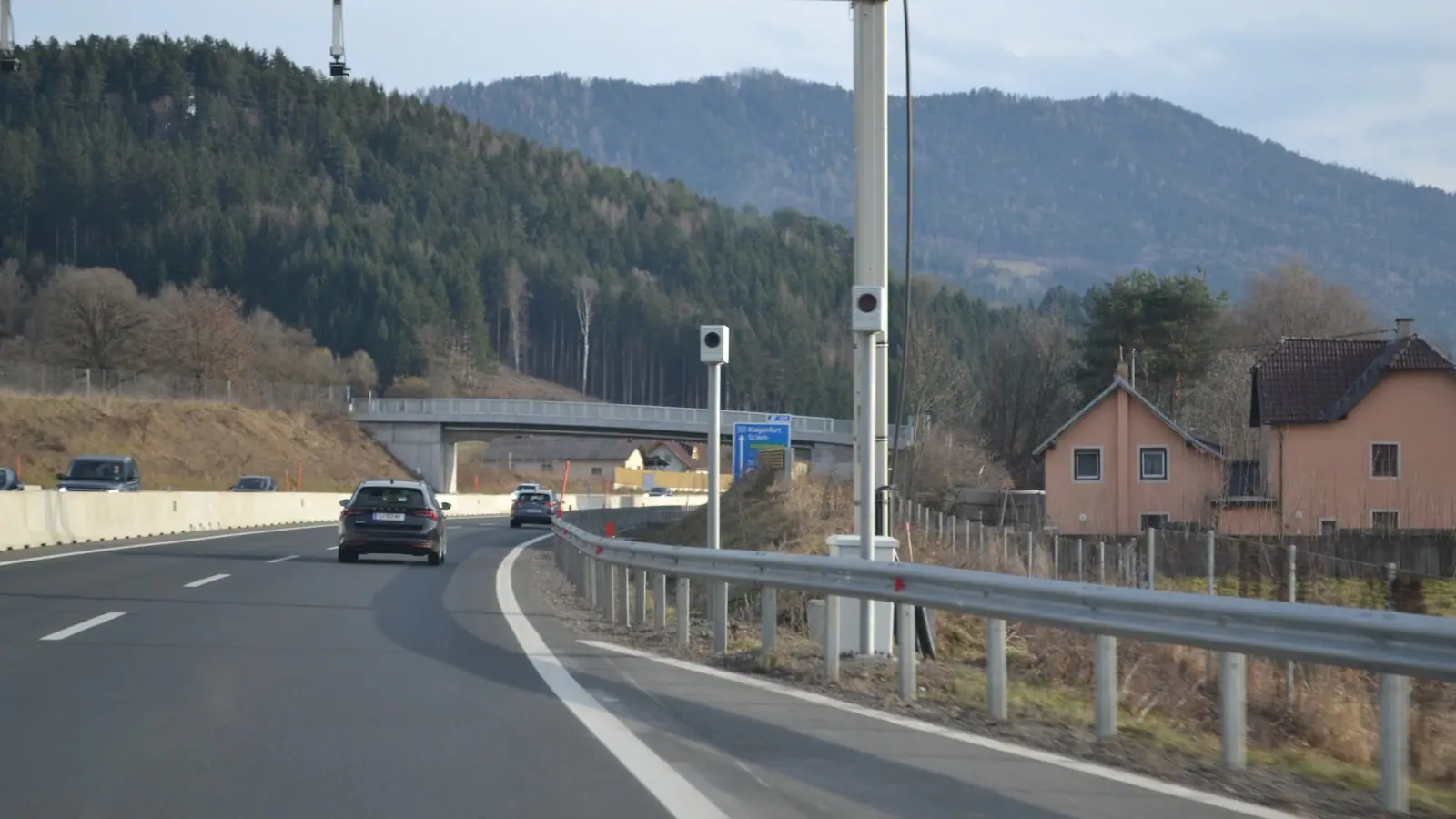
Braking when you spot a camera worked twenty years ago. Much of Europe now uses average-speed enforcement instead: Italy's Tutor system, described at SpeedingEurope, measures your average speed across an entire motorway section, so slowing for the camera and speeding between them still produces a fine. Section control of this kind is spreading across the continent.
France shows how quickly the numbers stack up. Under the official Service-Public.gouv.fr scale, exceeding the limit by under 20 km/h outside towns is a €68 fixed fine, while speeding in towns or by 20 to 50 km/h is €135, reduced to €90 if paid within 15 days and rising to €375 if paid late. From 29 December 2025, exceeding the limit by 50 km/h or more becomes a criminal fixed fine of €300.
The reliable defence is boring: set the rental car's speed limiter or adaptive cruise control to the posted limit and leave it there. Limits also change abruptly in Europe, especially in rain (France drops motorway limits in wet weather), so treat the posted number as a ceiling, not a target.
Mistake 4: Drifting into a bus lane
Bus lanes in European cities are camera-enforced and expensive, and tourists enter them constantly, usually while following a navigation prompt to turn right. In London, a bus lane penalty charge is £160, reduced to £80 if paid within 14 days, and the notice goes to the registered keeper, which for a rental car means the rental company, per the Greater London Authority. In France, driving in a voie de bus is a €135 fixed fine (€90 early, €375 late), camera-enforced in Paris, according to LegiPermis.
Watch the road surface, not just signs: bus lanes are marked with painted text or a different surface colour, and some operate only at certain hours. When in doubt, stay out. Honestly, the better fix is not to drive in major European city centres at all. Pick the car up when you leave the city, or park on the outskirts and take the metro in.
Mistake 5: Misreading parking colour codes
Kerb and bay colours are a legal code, not decoration, and they differ by country. In Italy, blue lines mean paid parking (roughly €1 to €3 per hour), white lines mean free or residents-only, and yellow means reserved for disabled drivers, residents or loading, per italy4.me. Parking fines in Italy run roughly €40 to €340 depending on the offence. In Spain, the zona azul (blue) is paid short-stay parking at around €0.50 to €2.50 per hour, while green bays give residents priority; a Barcelona parking fine is around €90 to €100, halved if paid within 20 days, according to traficotest.es.
Two habits prevent nearly all of it. First, if a bay is suspiciously empty on a busy street, there is a reason. Second, always find the meter or app zone number before walking away, and photograph the parking sign so you can check the hours later.
How fines actually reach you at home
The sequence is mechanical. A camera records your plate. The authority queries the rental company, which is legally obliged to disclose your details, and the European Consumer Centre France confirms rental firms cannot pay the fine for you. The rental company also debits an admin fee from your card, commonly €30 to €50 per fine depending on your rental terms, per Rentalcars.com. Then the fine itself arrives by post at your home address.
This used to be leaky. The European Commission estimates around 40% of cross-border traffic offences previously went unpunished. Directive (EU) 2024/3237, adopted on 19 December 2024, closes the gaps: it extends cross-border data exchange to offences including improper parking and access-restriction violations (the ZTL type), requires the vehicle's registration country to help identify the driver within two months of a request, and sets up an EU IT portal for checking and paying fines. Member states have two and a half years to transpose it, so enforcement tightens through 2027.
If you live outside the EU, in India or the UAE for example, enforcement runs through the rental company's card guarantee and, for the fine itself, international debt collectors. Distance is not immunity.
What to do if a fine arrives
Do not ignore it. Per the ECC France, an unpaid Italian fine roughly doubles after 60 days and is passed to international debt collectors. Instead:
- Check the fine is genuine: it should cite the offence, location, date and legal basis, and official payment details. Scam letters imitating traffic fines exist.
- Pay early if you accept it. Early-payment discounts are substantial: France cuts €135 to €90 within 15 days, Barcelona halves parking fines within 20 days, London halves bus lane penalties within 14 days.
- Contest promptly if you believe it is wrong. In Italy you have 60 days: an appeal to the Prefect is free but doubles the fine if you lose, while the Justice of the Peace route costs €38, per ECC France.
- Keep your rental agreement and card statements. The admin fee and the fine are separate charges from separate parties.
FAQ
How long after my trip can a European traffic fine arrive?
Longer than you would expect. Italian authorities have 360 days to dispatch a notification to a foreign resident, counted from dispatch rather than receipt, per ECC France. Six to twelve months after the trip is normal. Keep your rental paperwork for at least a year.
Will an Italian ZTL fine reach me in India or the UAE?
Very likely, yes. The rental company discloses your details to the authority and charges your card an admin fee, and the fine follows by post or via debt collectors. The new EU enforcement rules were designed to make exactly these fines stick, and unpaid Italian fines roughly double after 60 days.
Does the rental company pay my fine?
No. Rental companies are obliged to identify the driver, not to settle the fine, per ECC France. They pass your details to the authority and charge you an admin fee, commonly €30 to €50 per fine, on top of the fine itself.
Is there a discount for paying early?
Usually, and it is worth taking if you accept the fine. France reduces €135 to €90 within 15 days (Service-Public.gouv.fr), Barcelona cuts parking fines by 50% within 20 days, and London halves bus lane penalties paid within 14 days.
Do I need a vignette if I avoid motorways?
Generally no. Vignettes cover motorways and expressways, so sticking to ordinary roads avoids the requirement in Austria, Slovenia and Switzerland. But check the routing carefully: navigation apps default to motorways, and a single tolled stretch without a vignette costs €120 to €300.
How do I check whether my hotel is inside a ZTL?
Email the hotel before arrival and ask directly, including your car's plate if you have it, since many hotels can register guest vehicles for temporary access. City websites publish ZTL maps and operating hours. If the hotel is inside the zone, ask for the nearest garage outside it.
The cheap insurance: know the rules before day one
None of these five mistakes reflects bad driving. They are information failures, and every one is avoidable for less than the price of a coffee: buy the vignette online before you cross the border, and email your hotel about its ZTL before you arrive. Driving in Europe remains one of the safest, most rewarding ways to see the continent, as we cover in is driving in Europe safe?, and budgeting realistically for tolls and parking belongs in any Europe road trip budget.
If you would rather not research vignette borders and ZTL maps yourself, that is precisely what we do. Easy Escape's European ground experts design your self-drive route with every vignette flagged and every parking garage pre-located outside restricted zones, all delivered in your companion app, available only to Easy Escape travellers. Our fee is fixed, so our advice is never commission-driven. Tell us where you want to go at /plan.
Sources and references
- European Consumer Centre France: ZTL fines in Italy
- EVZ (ECC Germany): Limited traffic zones in Italy
- ch.ch: Motorway vignette
- ASFINAG: Toll sticker and digital vignette
- oesterreich.gv.at: Vignette for vehicles up to 3.5t
- DARS: E-vignette FAQ
- European Commission: New rules for cross-border enforcement of traffic laws
- EUR-Lex: Directive (EU) 2024/3237
- Service-Public.gouv.fr: Speeding penalties in France
- Greater London Authority: Bus lane fines
- LegiPermis: Driving in a bus lane in France
- italy4.me: Parking rules and signs in Italy
- traficotest.es: Parking in Barcelona 2026
- Rentalcars.com: Admin fees explained
- SpeedingEurope: Italy