Driving Restrictions in Europe (LEZ, ZTL, Vignettes)
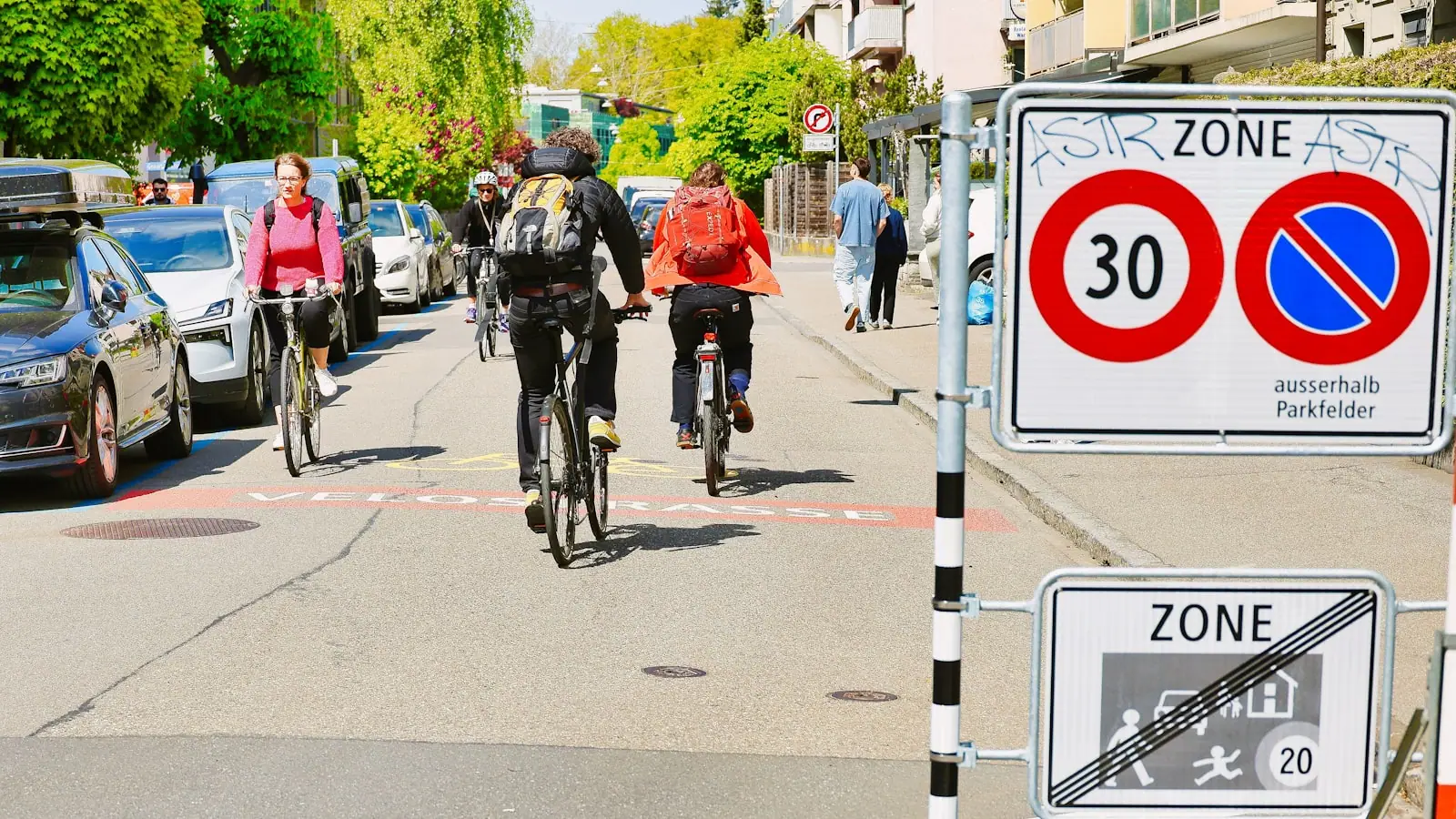
Driving restrictions in Europe come in four flavours, and each works differently. Low-emission zones (Germany's green sticker, France's Crit'Air) require an emissions badge on the windscreen. Italian ZTLs are camera-enforced no-go zones in historic centres. Vignettes are motorway passes required in Switzerland, Austria, Slovenia, Czechia and Hungary. Congestion charges (Milan, Stockholm) bill you per entry. None of them requires paperwork before you fly, but each one can generate a fine that follows your rental car's plate straight to your credit card.
There are now more than 320 active low-emission zones across Europe, with hundreds more planned (urbanaccessregulations.eu, AirQualityNews). This guide covers what each system costs, what is already sorted on a rental car, and what you must handle yourself.
What are low-emission zones, and do they apply to rental cars?
Yes, they apply to every vehicle in the zone, rentals included. The two schemes most road-trippers meet are Germany's Umweltzone and France's ZFE, and they work on windscreen stickers tied to the car, not the driver. This section covers the essentials; for city-by-city rules, registration deadlines and pass-through routes, see our full low-emission zones guide.
Germany: the green Umweltplakette
Around 60 German cities, including Berlin, Munich, Cologne, Stuttgart and Frankfurt, run Umweltzonen where only vehicles with the green class 4 sticker may enter (RAC). The sticker costs €5 to €15 from TÜV, DEKRA or any authorised garage, is a one-off purchase valid for the life of the vehicle, and driving a zone without it costs €100 (IamExpat).
The rental angle: a car rented in Germany almost always carries the sticker already. A car rented in Austria or Switzerland and driven into Stuttgart or Munich usually does not. Check the windscreen before you cross the border, and if it is missing, any TÜV or DEKRA station can issue one on the spot.
France: Crit'Air, and the 2026 legal twist
French low-emission zones (ZFEs) require a Crit'Air sticker classifying your vehicle by emissions. For foreign-registered vehicles, the sticker is ordered only through the official certificat-air.gouv.fr portal via Service-Public, costs about €3.85 posted abroad, and takes two to three weeks to arrive. Beware copycat sites charging €20 to €40 for the same €3.85 sticker; only the .gouv.fr site is official (France.fr). Driving a ZFE without the right sticker risks a €68 fine, or €135 for heavier vehicles (Service-Public).
Here is where 2026 got messy. The French Parliament voted in April 2026 to abolish ZFEs, but the Constitutional Council struck that vote down on 21 May 2026, so the zones remain legally binding (Connexion France). One practical softener: Greater Paris has suspended penalties for Crit'Air 3 vehicles until the end of 2026 (Sortiraparis). If you read elsewhere that French LEZs are being scrapped, that information is out of date.
The rental catch: you cannot order a Crit'Air sticker for a car you have not collected yet, because it is tied to the plate. A French-registered rental usually carries one already; ask the pickup desk to confirm before you drive into Paris, Lyon or Grenoble.
Why do Italian ZTLs catch so many tourists?
Because they are invisible until the fine arrives. A ZTL (Zona a Traffico Limitato) is a restricted-access zone covering the historic core of most Italian cities, enforced by cameras at every gate. Each pass under a camera is a separate infraction of €80 to €130, and tourists circling for parking in Florence can rack up several separate fines in a single afternoon, because every camera gate crossed counts on its own (European Consumer Centre).
Three things soften the blow:
- Pay fast. Italian fines carry a 30% discount if paid within 5 days (EVZ).
- Use the hotel whitelist. Hotels inside a ZTL can register your plate with the city, typically within about three hours of entry, and no fine is issued (Visit Florence). Call ahead with your rental's plate number.
- Park outside, walk in. The reliable strategy in Florence, Siena, Lucca and Rome is a garage outside the ZTL boundary. Do not trust navigation apps to route around ZTLs automatically; they often will not.
Planning a Tuscany or Amalfi Coast drive? ZTLs are the single biggest fine risk on those routes, bigger than speeding. Our guide to the five driving fines that catch visitors in Europe covers the rest.
Which countries require a vignette?
Five countries on the classic road-trip map sell motorway vignettes: Switzerland, Austria, Slovenia, Czechia and Hungary. All five now offer e-vignettes you can buy on your phone against the car's plate, before or at the border.
| Country | Best short-trip option | Price (2026) | Where to buy | Digital? |
|---|---|---|---|---|
| Switzerland | Annual only, no daily or weekly | CHF 40 | Official Via portal | Yes, plate-linked |
| Austria | 10-day | €12.80 (1-day €9.60 exists digital-only) | shop.asfinag.at | Yes, 1- and 10-day valid immediately online |
| Slovenia | 7-day | €16 (class 2A car) | DARS e-vignette (Tolls.eu) | Yes |
| Czechia | 10-day | CZK 300 (1-day CZK 230) | edalnice.gov.cz | Yes |
| Hungary | 10-day D1 | nemzetiutdij.hu | Yes |
Notes worth knowing:
- Switzerland has no short option. Even a single day on Swiss motorways requires the CHF 40 annual vignette, and the 2026 edition is valid from 1 December 2025 to 31 January 2027 (ch.ch). If your Switzerland plan is short, compare it with rail: our Swiss Travel Pass guide runs the numbers.
- 2026 is the last year Austria sells the physical sticker. From 2027 it is digital only (ASFINAG).
- Slovenia's class trap. High-fronted vans and some SUVs measuring over 1.3 m at the front axle fall into class 2B and pay double (Tolls.eu).
- Hungary's tariffs shift with the forint. Confirm the current D1 rate on the official nemzetiutdij.hu e-shop before buying; third-party resellers add markups.
Buy only from the official portals above. As with Crit'Air, unofficial resellers exist for every vignette and charge more for the identical product.
How do congestion charges work in Milan and Stockholm?
They are pay-per-entry city tolls, camera-enforced, with no barrier and no sticker. Milan's Area C charges €7.50 per entry into the historic core (higher for older diesels), and sits inside Area B, a separate low-emission zone covering most of the city (urbanaccessregulations.eu).
Stockholm and Gothenburg have charged foreign-registered cars their congestion tax since 2015 (Transportstyrelsen). For rentals, the company pays the tax and re-bills you at the end of the rental, and it is standard industry practice to add an administration surcharge on top of the tax itself (EVZ). The practical advice for both cities is the same as for ZTLs: park outside the charged zone and use public transport for the centre.
What about winter tyre rules?
If you drive between November and April, two sets of rules matter in the Alps. Austria mandates winter tyres from 1 November to 15 April in winter conditions: M+S or 3PMSF-marked, with at least 4 mm of tread (oesterreich.gv.at). Germany has no fixed dates; the obligation is situational, triggered by ice or snow, and since 1 October 2024 only tyres carrying the Alpine (3PMSF) symbol count (EVZ). Rental cars in Alpine countries are normally fitted seasonally, but confirm at pickup if your dates straddle the changeover.
How does a rental car change all of this?
The pattern is simple: a rental carries its home country's requirements and nothing else.
- A car rented in Switzerland, Austria, Slovenia, Czechia or Hungary carries that country's vignette. Cross a border, for instance Zurich into Austria, and the next vignette is yours to buy. E-vignettes make this a two-minute phone job against the rental's plate.
- A German rental usually has the Umweltplakette; an Austrian or Swiss rental driven into a German Umweltzone usually does not.
- A French rental usually has a Crit'Air sticker; a rental from anywhere else will not, and you cannot order one in advance for a plate you do not know.
And fines travel. Cameras read the plate, the authority bills the rental company, and the rental company charges your card plus an admin fee: typically €30 to €70 per forwarded Italian fine (EVZ), and a comparable surcharge on re-billed Swedish congestion tax. EU cross-border exchange of registration data means being a visitor is no shield, and unpaid fines can escalate through collection agencies long after you fly home.
This is exactly the sort of logistics we handle at Easy Escape. Every itinerary we design flags which vignettes and stickers your specific route needs, and the companion app, available only to Easy Escape travellers, pre-locates parking garages outside ZTL and congestion-charge boundaries so you never guess where the camera line is.
FAQ
Do I need a vignette if I rent the car in that country?
No, not for that country. Rentals registered in Switzerland, Austria, Slovenia, Czechia or Hungary carry their home vignette. You only buy one when you drive into a neighbouring vignette country, and you can do that as an e-vignette on your phone using the rental's plate.
Can I get a Crit'Air sticker for a rental car?
Not in advance, because the sticker is tied to a plate you do not know yet, and delivery abroad takes two to three weeks (Service-Public). French-registered rentals usually carry one; confirm at the pickup desk. Greater Paris is not penalising Crit'Air 3 vehicles until the end of 2026.
What happens if I drive into a ZTL by accident?
A camera photographs the plate and a fine of €80 to €130 is issued per gate crossed (ECC). If your hotel is inside the zone, ask them to whitelist your plate immediately; Florence hotels can do this within about three hours of entry. If a fine does arrive, paying within 5 days cuts it by 30%.
Will European traffic fines reach me after I fly home?
Yes. The authority bills your rental company, which charges your card on file plus an admin fee, commonly €30 to €70 in Italy (EVZ). This works regardless of where you live, so treat camera zones as seriously as any toll booth.
Is Google Maps enough to avoid ZTLs?
No. Mainstream navigation apps do not reliably route around ZTL boundaries. Plan your parking before you arrive, aim for a garage outside the zone, and walk or take a tram into the centre.
Do I need the Swiss vignette for a day trip?
Yes, if you touch a Swiss motorway. Switzerland sells only the CHF 40 annual vignette, with no daily or weekly option (ch.ch). Driving motorways without one earns an on-the-spot fine plus the cost of the vignette itself.
Plan a route where the rules are already handled
Restrictions look intimidating on paper, but on a well-planned route they amount to two or three phone purchases and a parking plan. If you would rather have someone map the vignettes, stickers and ZTL-safe garages for your exact route through the Swiss Alps or Central Europe, tell us your dates and taste and we will design the trip around them. Our fee is fixed, so our advice is never commission-driven. Start at /plan.
Sources and references
- ch.ch: Motorway vignette
- ASFINAG: Digital vignette
- ASFINAG: Last year of the toll sticker
- Service-Public.gouv.fr: Crit'Air for foreign-registered vehicles
- Service-Public.gouv.fr: Crit'Air certificate and ZFE fines
- France.fr: Crit'Air anti-pollution sticker
- Connexion France: Constitutional Council blocks removal of low-emission zones
- Sortiraparis: Greater Paris ZFE penalty pause
- RAC: German emissions sticker
- IamExpat: Umweltplakette
- European Consumer Centre: ZTL fines in Italy
- EVZ: ZTL Italy and fine forwarding
- Visit Florence: Driving in Florence and the ZTL
- Tolls.eu: Slovenia vignette
- eDalnice.gov.cz: Czech e-vignette price list
- Nemzetiutdij.hu: Hungarian e-vignette rates
- urbanaccessregulations.eu: Milan Area C
- Transportstyrelsen: Congestion taxes in Stockholm and Gothenburg
- oesterreich.gv.at: Winter tyre rules in Austria
- EVZ: Winter tyres within Europe
- urbanaccessregulations.eu: European access regulations overview
- AirQualityNews: 320 European cities now have active low-emission zones