Winter Driving in Europe: Alpine Pass Closures (2026)
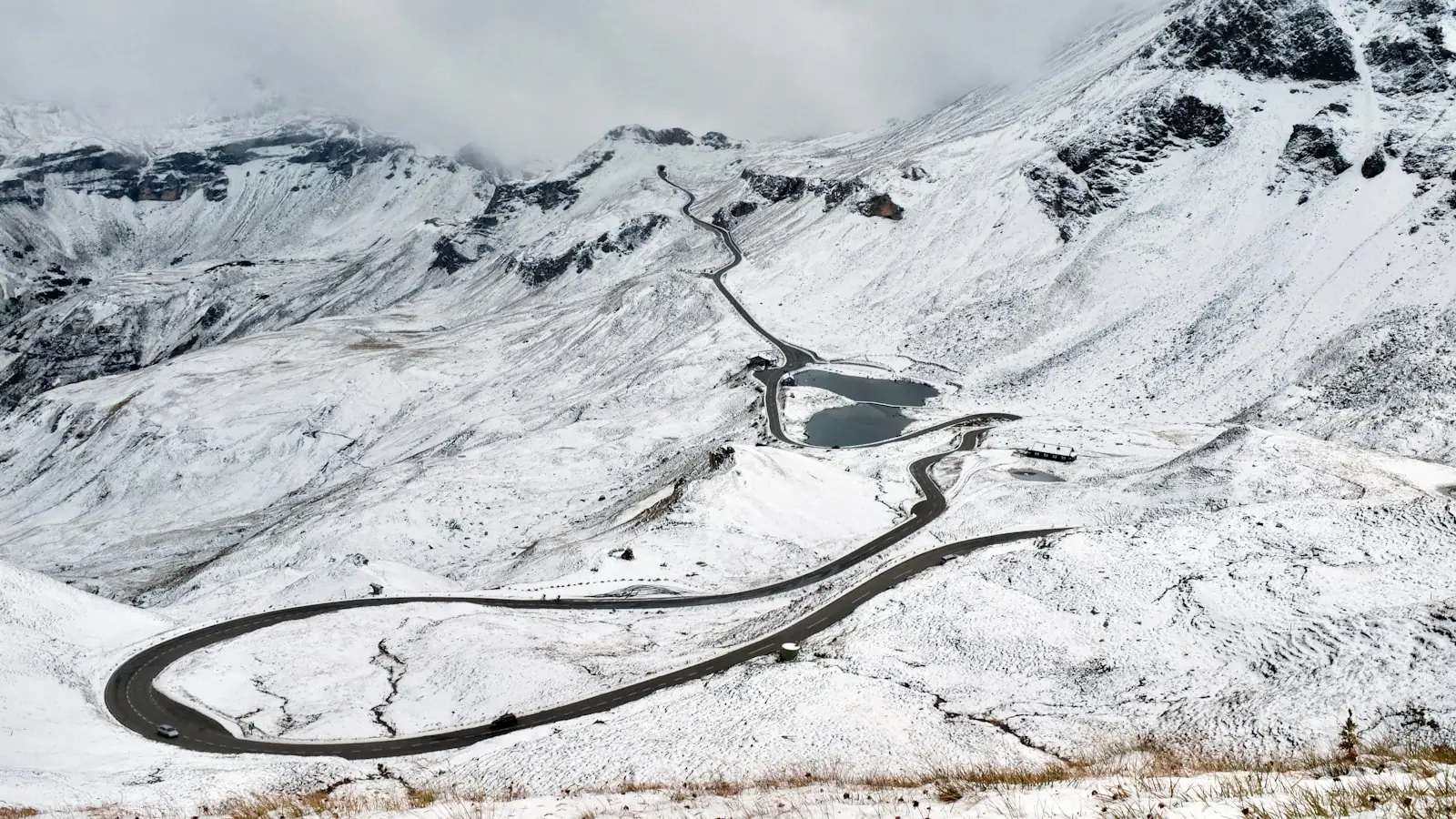
Europe's famous high passes close for winter. The Furka, Grimsel, Susten, Stelvio, Großglockner and Col de l'Iseran shut from roughly late October or early November until late May or June, every year (Swiss Federalism). The Alps stay crossable all winter through tunnels and car trains; you just need a different map than the summer one.
That single fact reshapes trip planning. An itinerary that works beautifully in July, looping over three Swiss passes in a day, is physically impossible in December. The road is not "risky" or "slow" in winter, it is gated shut under metres of snow. This guide covers when the big passes close, what stays open, and the tyre and chain laws that apply once you are up there.
Key Takeaways
- The classic Swiss trio (Furka, Grimsel, Susten) is closed roughly November to June; in 2026 Furka and Grimsel reopened on 29 May and Susten on 12 June (Plan the Alps).
- The Gotthard road TUNNEL is open year-round and covered by the CHF 40 vignette; the Gotthard PASS above it closes November to May (ch.ch, swissinfo).
- Austria requires winter tyres in wintry conditions from 1 November to 15 April, with fines that can reach EUR 5,000 if you endanger others (bmimi.gv.at, The International).
- France's Loi Montagne makes winter tyres or on-board chains mandatory in 48 mountain departments from 1 November to 31 March, fine EUR 135 (FrenchEntrée).
- Three Swiss car trains (Furka, Vereina, Lötschberg) carry your car under closed passes in 15 to 18 minutes, all year (MySwissAlps).
Why Do Alpine Passes Close in Winter?
They close because keeping them open is impossible, not because someone is being cautious. A road at 2,400 m collects snow depths measured in metres, and the hairpin sections sit directly under avalanche paths. Road crews stop clearing in late autumn, the snow accumulates all winter, and reopening in May takes weeks of cutting through walls of packed snow on both sides (Bonneval-sur-Arc tourist office).
Two planning consequences follow. First, closure dates are approximate: a heavy winter delays reopening by weeks, and an early cold snap can shut a pass in mid-October. Always check the live status the week you travel, on alpen-paesse.ch for Switzerland or the operator's own site elsewhere. Second, closure is binary. There is a barrier across the road. No winter tyres, chains or confidence will get you over a closed pass, which is why the real winter skill is knowing the alternatives, not the heroics.
One naming trap catches almost everyone: "Gotthard" is three different things. The Gotthard PASS is the scenic mountain road, closed November to May. The Gotthard road TUNNEL is the 17 km motorway tube underneath it, open every day of the year and included in the Swiss vignette (The Ski Guru). There is also a rail tunnel that does not carry cars at all. When a headline says "Gotthard closed", check which one it means.
When Do the Famous Passes Open and Close?
Plan on the big passes being open June through October and closed the rest of the year. The table gives the typical pattern plus the crossing to use instead; the 2026 reopening dates show how much the "typical" drifts in a given year.
| Pass | Country | Typically closed | 2026 reopening | Year-round alternative |
|---|---|---|---|---|
| Furka (2,429 m) | Switzerland | mid-Oct to late May | 29 May (Plan the Alps) | Furka car train Realp–Oberwald (MySwissAlps) |
| Grimsel (2,164 m) | Switzerland | Nov to late May/June (Swiss Federalism) | 29 May (Plan the Alps) | none direct; reroute via Interlaken–Kandersteg + Lötschberg car train |
| Susten (2,224 m) | Switzerland | Nov to mid-June (Swiss Federalism) | 12 June (Plan the Alps) | A2 motorway via the Gotthard tunnel |
| Gotthard Pass (2,106 m) | Switzerland | Nov to May (swissinfo) | late May, varies | Gotthard road tunnel, open 24/7 (Gotthard tunnel FAQ) |
| Großglockner (2,504 m) | Austria | early Nov to late April | 25 April, closes 2 Nov (grossglockner.at) | A10 Tauern motorway or Felbertauern tunnel road |
| Stelvio (2,758 m) | Italy | ~1 Nov to late May/June (EpikDrives) | varies with snowfall | SS38 valley roads via Bormio; no direct crossing |
| Col de l'Iseran (2,764 m) | France | first Monday of Nov to early June (Bonneval-sur-Arc) | early June, varies | A43 + Fréjus tunnel for France–Italy |
Note the Großglockner detail: it is a toll road with gates and opening hours even in summer, so check times and prices at grossglockner.at before building a day around it.
The practical read of that chart: October trips are the gamble. Early October usually has everything open with autumn colours; late October can lose a pass overnight to the first storm. If a specific pass is the point of your trip, as it often is on a Swiss Alps itinerary, aim for mid-June to September.
Which Crossings Stay Open All Year?
Every major Alpine axis has a year-round crossing, so winter never traps you on one side; it only changes which road you take. Three kinds exist: motorway tunnels, low passes, and Swiss car trains, where you drive onto a flat rail wagon and sit in your car for a 15-minute ride under the mountain (MySwissAlps).
| Crossing | Type | Connects | Winter status and cost notes |
|---|---|---|---|
| Gotthard road tunnel (A2) | tunnel | Göschenen–Airolo (central CH–Italy axis) | open 24/7 all year, included in CHF 40 vignette (Gotthard tunnel FAQ, ch.ch) |
| San Bernardino tunnel (A13) | tunnel | Thusis–Bellinzona (eastern CH) | open all year, vignette covers it (vignetteswitzerland.com) |
| Mont Blanc tunnel | tunnel | Chamonix (FR)–Courmayeur (IT) | open 24/7 all year; car one way passed EUR 56 in 2026 (Euronews, TrasportoEuropa) |
| Fréjus tunnel | tunnel | Modane (FR)–Bardonecchia (IT) | open all year, priced like Mont Blanc (TrasportoEuropa) |
| Brenner (A13/A22) | low pass, 1,370 m | Innsbruck (AT)–Bolzano (IT) | motorway kept open all year; Austrian section toll about EUR 11.50 (Wikivoyage, ASFINAG) |
| Furka car train | car train | Realp–Oberwald | all year, 15 min, hourly or better (Andermatt tourism) |
| Vereina car train | car train | Klosters–Sagliains (Engadin) | all year, 18 min; the standard winter route to the Engadin (Rhaetian Railway) |
| Lötschberg car train | car train | Kandersteg–Goppenstein (Valais) | all year, 15 min, every 30 min (MySwissAlps) |
Tunnel tolls are a real budget line: one Mont Blanc return costs more than most people's entire vignette spend. Our tolls guide breaks down tunnel and vignette prices in detail. The car trains charge per car; fares are modest but change by season, so check the operator links above when you book.
Crossing the Alps in Winter: The Decision Flow
The decision is mechanical once you stop thinking of the summer road as the default. Between November and May, assume the scenic pass is shut and work down this ladder.
Navigation apps handle the reroute automatically once a closure is registered, but they register it late on the day a storm closes a road. Check status yourself the morning of any mountain leg; it takes one minute and it is the difference between adjusting at breakfast and turning around at a barrier at 1,800 m.
Winter Tyre Laws by Country (2026)
Five countries, five different logics. The one rule that now spans Germany and Austria: since October 2024 only tyres with the Alpine symbol (a snowflake inside a mountain outline, also written 3PMSF) count as winter tyres; the old M+S marking alone no longer qualifies (EVZ).
| Country | Rule (2026) | When | Penalty |
|---|---|---|---|
| Germany | situational: winter tyres required whenever there is snow, ice or slush, no fixed dates (EVZ) | any wintry day | fine plus points; insurance issues after a crash |
| Austria | situational within a fixed window: winter tyres (min 4 mm tread) required in wintry conditions (bmimi.gv.at) | 1 Nov to 15 Apr | from EUR 35, up to EUR 5,000 if others are endangered (The International) |
| France | Loi Montagne: 3PMSF tyres OR chains/socks on board, in 48 mountain departments marked by B58 zone signs (FrenchEntrée) | 1 Nov to 31 Mar | EUR 135, possible immobilisation |
| Italy | regional: where signed or ordered, winter tyres or chains on board; Val d'Aosta requires them region-wide 15 Oct to 15 Apr (Eurocampings) | typically 15 Nov to 15 Apr | fines vary by province |
| Switzerland | no law, but real liability: unsuitable tyres in a crash mean reduced insurance payouts and possible fines (ch.ch, Comparis) | winter conditions | payout cuts, negligence claims |
"Situational" is the concept to internalise. Germany and Austria do not care about the calendar; they care about the road surface at the moment you drive on it. Summer tyres on a dry Munich motorway in December are legal. The same tyres an hour later in falling snow are an offence, and if you block a road or cause a crash, an expensive one. This is why rental cars in the Alpine countries are winterised by default in season, which brings us to rentals below.
Snow Chains and the Blue Sign
Chains are a legal instrument, not just an accessory. A round blue sign showing a chained tyre means chains are mandatory on at least two drive wheels from that point, even if the road looks merely wet; the requirement appears on climbs to ski resorts and some pass approaches in France, Italy, Austria and Switzerland (Alpina). Ignore it and you face a fine, but the worse outcome is practical: you will spin to a stop on the first steep hairpin and block everyone behind you.
Three chain facts worth knowing before you need them. Chains go on the driven axle, which on most rentals is the front. They are for snow-covered surfaces only; driving them on cleared tarmac wrecks the chains and the road, so fit them at the roadside bays provided and remove them when the snow ends (FrenchEntrée). And practise once in daylight before the trip; the first fitting always takes ten fumbling minutes, better spent in a dry car park than a blizzard. Textile snow socks are accepted as an alternative in France under the Loi Montagne, but in Austria only certified chains satisfy a chain-sign obligation, so carry real chains for an Austrian winter route (AutoSock).
What Does the Rental Company Provide?
In Austria, Switzerland and Germany, rental cars come with winter tyres in season as standard practice, sometimes shown as an included line item, sometimes as a "winterisation fee" of a few euros per day on the rental agreement (Auto Europe). In France and Italy it is less automatic: if your route touches the Alps between November and March, filter for a "winter tyres included" option when booking or request it in writing, because turning up in a summer-shod car makes the Loi Montagne zones off-limits to you.
Chains are almost never in the boot by default. They are a bookable extra at most desks, subject to availability, so reserve them with the car rather than asking at pickup (Avis winter equipment). Two more pickup checks that take a minute: confirm the tyres actually carry the Alpine symbol on the sidewall, and confirm cross-border permission covers every country on your route, a point we cover in the wider self-drive guide. If the desk cannot provide winter tyres for an Alpine itinerary, change the car, not the itinerary.
Never Driven on Snow? Read This Section Twice
Most of our readers from the Gulf and India have never driven on a snow-covered road, and there is no shame in that; you cannot practise on sand what ice does to braking. The honest version: winter tyres and modern stability control make snow driving very learnable, but your following distance and your speed assumptions from Dubai or Bengaluru do not transfer. Braking distances on packed snow are several times longer than on dry tarmac, and the danger peaks around zero degrees, when melting and refreezing creates ice you cannot see.
The basics that do the work: drive as if your inputs are suggestions, meaning gentle throttle, early gentle braking, and smooth steering, because sudden anything breaks traction. Leave four to six seconds behind the car ahead. If the car slides, look and steer where you want to go and stay off the brake until it straightens. Do mountain legs in daylight, keep the tank above half, and carry water, snacks and warm layers in the cabin, since a closed road can mean hours of waiting. General road risk in Europe is low and the network is superbly maintained, as our safety guide shows, and that holds in winter if you respect the surface.
And know when not to bother. If snow is falling hard and your only reason for a high road is scenery you will not see anyway, take the tunnel. The Gotthard tube is not beautiful, but it is dry, lit, and included in your vignette, and it delivers you to the sunny side of the Alps in twenty minutes. Nobody's trip was ruined by a tunnel; plenty have been ruined by pressing on. If you would rather have the whole winter routing question solved for you, tunnels, tyre laws and all, that is exactly what we do when we plan your route.
FAQ: Winter Driving and Alpine Passes
Can I drive the Furka or Stelvio Pass in December?
No. Both are physically closed and snowed under, typically from late October or early November until late May or June (Plan the Alps, EpikDrives). No vehicle or equipment changes that. Use the Furka car train or, for the Stelvio region, the valley roads, and save the hairpins for summer.
Is the Gotthard tunnel open in winter?
Yes, every day of the year, around the clock, and it is covered by the CHF 40 Swiss vignette with no extra toll (Gotthard tunnel FAQ, ch.ch). Only the mountain pass above it closes. The San Bernardino tunnel on the A13 is the year-round backup on the same axis.
Do I legally need winter tyres for a winter trip?
In Austria yes, in wintry conditions from 1 November to 15 April (bmimi.gv.at); in Germany whenever there is snow or ice; in French mountain zones from 1 November to 31 March (FrenchEntrée). Switzerland has no law but punishes bad tyres through insurance. In practice: any Alpine winter route needs them.
What is a car train and how does it work?
You drive your car onto a flat rail wagon, put the handbrake on, and stay seated while the train runs through a tunnel under a closed pass. The Swiss Furka, Vereina and Lötschberg shuttles take 15 to 18 minutes, run all year, and need no booking for cars (MySwissAlps). Pay per car at the ramp or online.
When do the passes reopen in spring?
Late May to mid-June for most of the high Swiss passes, after weeks of snow clearing; in 2026 Furka and Grimsel opened on 29 May and Susten on 12 June (Plan the Alps). The Großglockner opens earlier, on 25 April in 2026 (grossglockner.at). Early June trips should keep a tunnel fallback.
Are snow chains required even with winter tyres?
Sometimes. The round blue chain sign makes chains mandatory on the drive wheels regardless of your tyres (Alpina), and French Loi Montagne zones accept chains on board as an alternative to 3PMSF tyres. For any winter itinerary above the valleys, rent chains with the car and practise fitting them once.
Sources and references
- Plan the Alps: Swiss pass opening dates 2026
- Swiss Federalism: reopening of the Swiss passes
- alpen-paesse.ch: Furka pass status
- swissinfo: Gotthard Pass closes for winter
- Gotthard road tunnel: FAQ
- The Ski Guru: Gotthard explained
- vignetteswitzerland.com: San Bernardino tunnel
- grossglockner.at: 2026 season opening and winter closure from 2 November
- EpikDrives: Stelvio Pass opening dates
- Bonneval-sur-Arc: Col de l'Iseran opening and closing
- Wikivoyage: Brenner Pass
- ASFINAG: section tolls
- Euronews: Mont Blanc tunnel travel
- TrasportoEuropa: Mont Blanc and Fréjus 2026 tolls
- MySwissAlps: car trains in Switzerland
- Rhaetian Railway: Vereina car transporter
- Andermatt tourism: Furka car transport
- ch.ch: winter tyres in Switzerland and motorway vignette
- Comparis: are winter tyres compulsory in Switzerland?
- bmimi.gv.at: winter tyres and snow chains in Austria
- The International: Austria's winter tire law
- EVZ: winter tyre rules in Germany and Europe
- FrenchEntrée: winter tyres and snow chains in France
- Eurocampings: winter tyre rules in Italy and France
- Alpina: when are snow chains mandatory
- AutoSock: snow socks and the Austrian chain obligation
- Auto Europe: winter car hire requirements
- Avis: winter equipment for rentals