Europe Road Trip on a Budget - Real 2026 Costs

A budget Europe road trip in 2026 realistically costs €65 to €100 per person per day for two people sharing a car, covering the rental, fuel, tolls, mid-range rooms and food. Drop that to €45 to €70 in Bulgaria, Romania or inland Spain and Portugal, where Eurostat puts price levels at 63 to 73 percent of the EU average. The single biggest lever is not where you sleep. It is how many people share the car, because a vehicle split four ways beats almost every rail pass on price.
Here is the honest arithmetic, with 2026 prices from official sources.
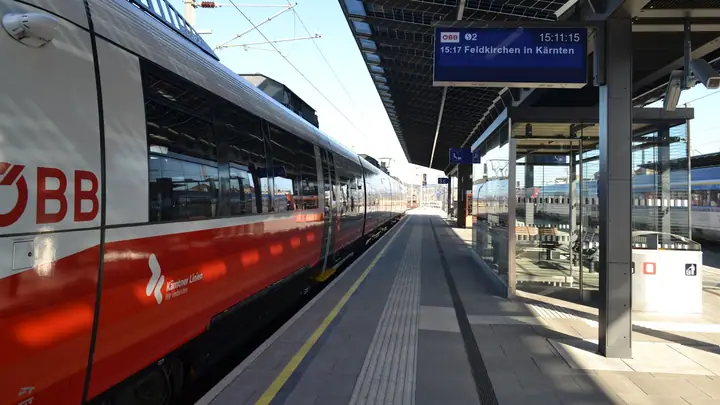
Is it cheaper to drive or take trains in Europe?
For three or four people travelling together, driving wins clearly. For a solo traveller hopping between big cities, rail usually wins. The crossover sits at two people, where the answer depends on your route.
Take a worked example: 7 days, about 1,200 km, 4 adults.
| Item | Car (4 people) | Eurail (4 people) |
|---|---|---|
| Vehicle or pass | Economy rental, roughly €315 for the week | 4 Global Passes (7 days in 1 month) at ~€385 each, about €1,540 (Seat61; check the live price at eurail.com) |
| Fuel | ~78 litres at the EU average of ~€1.72/L, about €134 (EC Weekly Oil Bulletin) | Included |
| Tolls and vignettes | €60 to €90 depending on route | Seat reservations, €10 to €20 per person per high-speed leg |
| Transport total | Roughly €510 to €540, or €18 to €19 per person per day | €1,600 or more, €57+ per person per day |
Two caveats, stated plainly. Solo travellers and couples doing pure city-to-city trips often do better by rail, and we have said so in our Eurail Pass guide. And a car adds costs the table hides: city parking can run €20 to €40 a night, and rental insurance excess is real money if you skip cover. If Switzerland is your whole trip, compare against the Swiss Travel Pass too; the 2026 price is around CHF 254 for 3 days and CHF 439 for 8 days in second class (SBB; MySwissAlps).
On rentals: expect roughly €25 to €45 per day for an economy car booked early, more at airports. Airport pickup surcharges, young-driver fees for those aged 21 to 24, and extra-driver charges all add up, so read the quote line by line (Rick Steves).
Where is fuel cheapest, and how do you predict your bill?
Fuel prices vary by more than 60 percent across the EU, so where you fill up matters as much as how far you drive. In early July 2026, Euro 95 petrol averaged about €1.72 per litre across the EU, but the spread ran from €1.44 in Spain and €1.47 in Bulgaria to €1.81 in Italy, €1.90 in Germany, €1.94 in France and a painful €2.33 in Denmark (fuel-prices.eu, mirroring the EC Weekly Oil Bulletin).
Practical rules that follow from the data:
- Crossing from France or Germany into Spain? Arrive near empty, leave full.
- Never fill up at motorway service stations. Drive 5 minutes off the exit to a supermarket station and the same tank costs noticeably less.
- Before you commit to a route, run it through ViaMichelin, which estimates fuel and tolls per route, and check the Oil Bulletin for the countries you cross.
- Confirm which fuel your rental takes before the first fill. Our guide to fuel types in Europe covers the labels at the pump.
Tolls and vignettes: the 2026 prices, from official sources
Budget €60 to €90 for tolls and vignettes on a typical one-week, multi-country route. Vignette countries charge a flat sticker fee; France, Italy, Spain and Portugal charge per kilometre instead. These are the 2026 rates from the national road authorities:
| Country | What you need | 2026 price (car) | Official shop |
|---|---|---|---|
| Austria | Digital vignette | 1 day €9.60, 10 days €12.80, 2 months €32.00 (ASFINAG) | shop.asfinag.at |
| Switzerland | Vignette, flat rate | CHF 40, valid 1 Dec 2025 to 31 Jan 2027 (ch.ch) | e-vignette.ch |
| Slovenia | e-vignette | 7 days €16 for a standard car (DARS official e-vignette shop) | evinjeta.dars.si |
| Czechia | e-vignette | CZK 300 (about €12) for 10 days (official price list) | edalnice.cz |
| Hungary | e-vignette | Roughly €15 to €16 for 10 days; current HUF rates at nemzetiutdij.hu | nemzetiutdij.hu |
| France | Per-km tolls | Roughly €7 to €15 per 100 km on autoroutes; Paris to Nice is about €89 (Sanef calculator) | Pay at the barrier |
French autoroute rates rose 0.9 to 1.4 percent in February 2026, so treat older toll estimates as a floor (service-public.gouv.fr).
Watch for a pair of traps here. First, Austria's online 2-month and annual e-vignettes only become valid on the 18th day after purchase under consumer-protection rules; the 1-day and 10-day versions are valid immediately (oesterreich.gv.at). Buy short-duration vignettes for a holiday. Second, driving in Switzerland without a vignette costs CHF 200 on the spot (FOCBS).
And always buy from the official shops listed above. Unofficial reseller sites rank well in search results and charge a markup of several euros per vignette for nothing.
How do you sleep cheaply on a road trip?
Camping is still the cheapest bed on wheels-adjacent travel, averaging €49 per night in high season 2026 for two adults, a child and a pitch, up 7 percent on 2025 (PiNCAMP price analysis). Counterintuitively, Norway (€38), Sweden (€40) and Germany (€41) are the cheapest camping countries, while Croatia (€73), Italy (€63) and Switzerland (€61) are the priciest.
If camping is not your style, two tactics do most of the work:
- The city-edge trick. A car frees you from needing a city-centre bed. A hotel or guesthouse 15 minutes outside Florence, Munich or Ljubljana often costs half the centre price, with free parking instead of €25-a-night garages.
- Guesthouses and agriturismi. Family-run places in rural Italy, Spain, and the Balkans routinely include breakfast and parking at prices city hotels cannot touch.
Eating well for less: the supermarket strategy
Plan one restaurant meal a day and build the rest around supermarkets and bakeries, and food drops to €20 to €30 per person daily without feeling like a sacrifice. A Lidl, Carrefour or local-chain haul of fresh bread, fruit, cheese and cured or grilled vegetables eaten at a viewpoint is one of the genuine pleasures of driving Europe, not a compromise.
For vegetarian, Jain and halal travellers, big-chain supermarkets are the reliable option: EU labelling makes ingredients easy to check, larger Carrefour and Lidl stores stock marked vegetarian ranges, and halal counters are common in bigger French, German and Dutch cities. Self-catering also solves the small-town dinner problem where menus can be meat-heavy.
Lunch menus are the other lever. In Spain the fixed-price menú del día, and in France the formule midi, serve the same kitchen's food at a fraction of dinner prices.
When should you go?
Shoulder season, April to May and September to October, is the budget answer. High-season accommodation in June to August typically runs 30 to 50 percent dearer, roads are busier, and popular sights need pre-booking. Shoulder months keep long daylight and open mountain passes for most of the season, with meaningfully lower prices on rooms and rentals.
Where does your money go furthest?
Bulgaria, Romania and Poland, at 63, 65 and 73 percent of the EU average price level respectively, are the cheapest countries in the bloc, and Eurostat ranks Bulgaria cheapest specifically for restaurants and hotels (Eurostat, June 2026). Denmark (140 percent), Ireland (136) and Luxembourg (132) sit at the other end.
That maps onto two road-trip sweet spots. The Balkans combine those low Bulgarian and Romanian prices with cheap fuel (€1.47/L in Bulgaria) and coastline and mountains that rival anywhere on the continent. Spain and Portugal pair the EU's cheapest petrol (€1.44/L in Spain) with largely toll-light routes inland and lunch menus that make eating out affordable daily.
Budget mistakes that cost first-timers real money
These are the errors we see most often, and every one is avoidable:
- Buying vignettes from unofficial websites. Use only the national shops in the table above.
- Fuelling on the motorway. Supermarket stations a few minutes off the exit are consistently cheaper.
- Airport rental pickups without checking the surcharge. Collecting in town can save €20 to €80.
- Skipping the excess insurance decision until the desk. Decide before you travel; desk prices are the worst.
- Ignoring city driving rules. Italian ZTL zones and low-emission zones generate fines that arrive months later. Our Europe driving restrictions guide and five driving-fine mistakes cover the specifics.
- Forgetting paperwork if you are visiting from outside the EU. The Entry/Exit System has been fully operational since 10 April 2026, so expect fingerprints and a photo at your first Schengen entry, and ETIAS is due to launch in the last quarter of 2026 with no exact date set. Neither is needed to drive between Schengen countries once you are inside (travel-europe.europa.eu). Many licences also need an International Driving Permit, and your rental booking supports a Schengen visa itinerary.
FAQ
How much does a Europe road trip cost per day for two people?
Plan on €130 to €200 per day for the couple combined (€65 to €100 each) across Western Europe, covering car, fuel, tolls, a mid-range room and food. In Bulgaria, Romania or inland Iberia, €90 to €140 for two is realistic at 2026 prices.
Is it cheaper to drive or take trains in Europe?
With four people, driving costs roughly €18 to €19 per person per day for transport versus €57 or more with Eurail Global Passes on a comparable week. Solo travellers doing city-to-city trips usually do better by rail.
How much are tolls for driving across Europe?
Budget €60 to €90 for a typical one-week multi-country route. Vignette countries are cheap (Austria 10 days €12.80, Czechia about €12), while France charges per kilometre at roughly €7 to €15 per 100 km of autoroute.
Which European country is cheapest for a road trip?
Bulgaria is the cheapest, at 63 percent of the EU average price level and ranked lowest in the EU for restaurants and hotels by Eurostat, with petrol at about €1.47/L. Romania and inland Spain and Portugal follow closely.
How do I avoid vignette fines in Austria and Switzerland?
Buy before you touch the motorway, from the official shops only: shop.asfinag.at for Austria and e-vignette.ch for Switzerland. Switzerland fines CHF 200 on the spot. In Austria, choose the 1-day or 10-day vignette, which is valid immediately; online 2-month and annual vignettes only activate 18 days after purchase.
Do I need ETIAS to drive in Europe in 2026?
Not yet. ETIAS launches in the last quarter of 2026, with no exact date announced. EES border checks (fingerprints and photo) have applied since April 2026, but once inside the Schengen area you can drive between member countries without further border formalities.
Plan it once, drive it stress-free
Budget road-tripping rewards preparation: the savings above come from booking early, buying vignettes officially, and routing around expensive fuel. If you would rather have all of that handled, Easy Escape designs bespoke self-drive trips built by experts who live in Europe, with the rental, hotels, routes and pre-located parking delivered in a companion app available only to our travellers. One flat service fee. Whether you choose a guesthouse or a five-star palace, our fee stays the same, so we have no incentive to upsell. Start with our road trip planning guide, or tell us your budget and we will make it go further.
Sources and references
- EC Weekly Oil Bulletin
- fuel-prices.eu weekly overview
- ASFINAG digital vignette
- oesterreich.gv.at vignette rules
- ch.ch motorway vignette
- FOCBS motorway charge
- DARS Slovenian e-vignette shop
- Czech e-vignette official price list
- Hungarian e-vignette rates
- Sanef toll calculator
- service-public.gouv.fr toll increase
- Eurostat price levels, June 2026
- PiNCAMP price analysis 2026
- Seat61 Eurail pass guide
- Eurail Global Pass
- SBB Swiss Travel Pass
- MySwissAlps Swiss Travel Pass
- Rick Steves on car rental costs
- EES and ETIAS timeline
- ViaMichelin route planner